The dark sky within reach of Washington
You can’t outrun the East Coast light dome in a weekend, but you can climb above the worst of it. Shenandoah National Park rides the Blue Ridge just ~75 miles from the capital, and up on the crest at Big Meadows — the park’s night-sky hub and home of the annual Night Sky Festival — the stars come back. Be honest about it: this is a Bortle ~4 sky, not the shadow-casting black of Cherry Springs. But on a clear, moonless night the Milky Way stands up over the meadow, and it’s the darkest easy escape the DC / NoVA crowd has. Sleep on Skyline Drive, hike the high ridge by day, and walk out into the open field after dark.
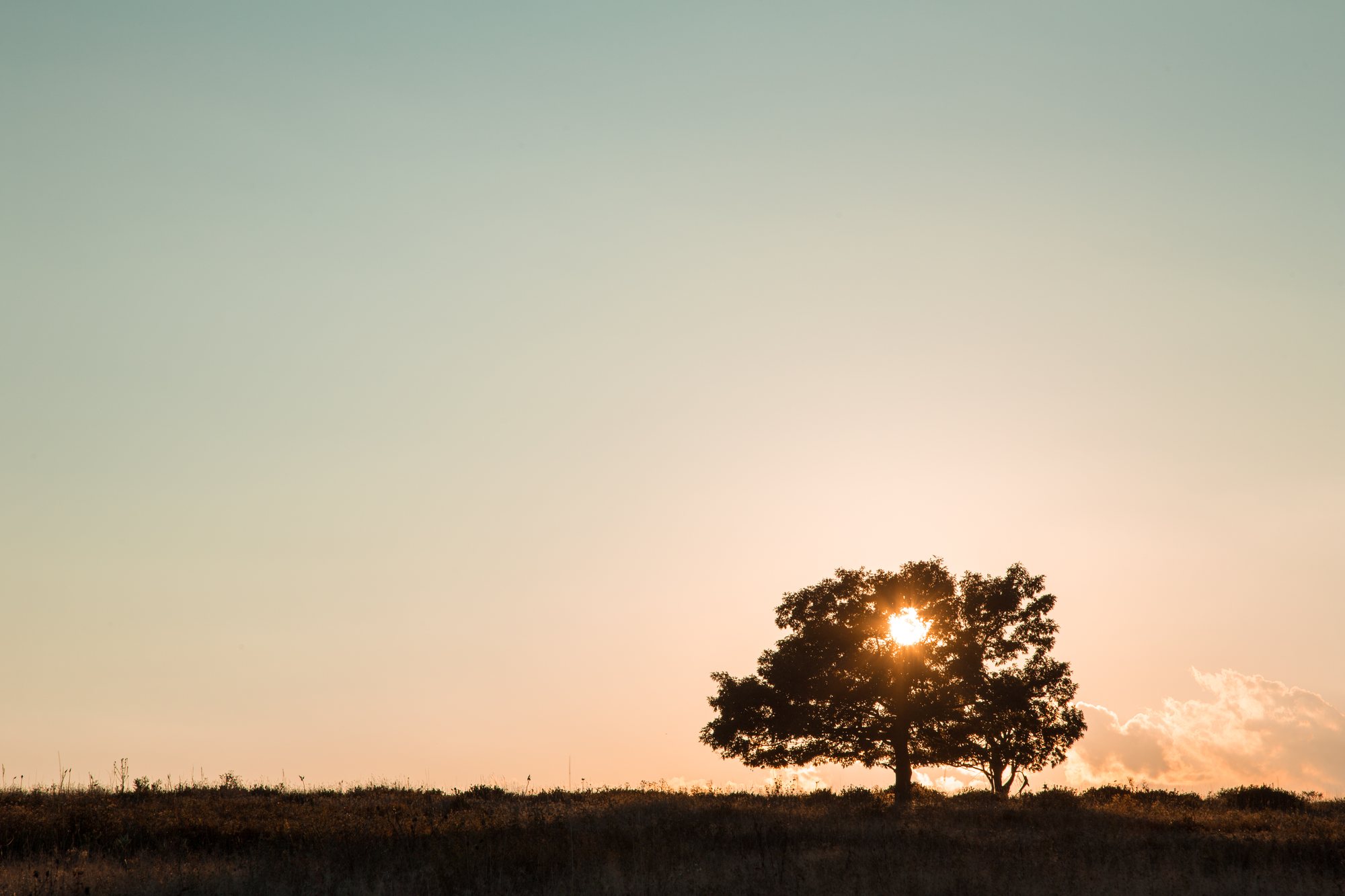
- Where
- Shenandoah National Park, along Skyline Drive on the Blue Ridge crest — Big Meadows, mile 51, Virginia
- The trip
- A dark-sky weekend — three days, two nights, from lodges right on the ridge. No backpack required.
- The sky
- Big Meadows — Bortle ~4, the darkest sky within an easy drive of DC; Milky Way naked-eye on clear, moonless nights (honestly: not Cherry Springs)
- Days
- Short, high-ridge hikes — Hawksbill (the park’s roof), Stony Man, the Bearfence rock scramble, Dark Hollow Falls
- Nights
- The open Big Meadows field & west-facing Skyline Drive overlooks — walk out, look up
- Base
- Big Meadows Lodge, Skyland, or Lewis Mountain cabins — all on the crest; or a gateway town, see below
- When
- Summer for warm nights; fall for the Skyline Drive foliage. Aim for the new-moon week — and the August Night Sky Festival if you want the party.
Checking the next few nights over the ridge…
A dark-sky trip lives or dies on the clouds — check before you commit to the drive up Skyline Drive, and plan the date around the new-moon window above. Full night-sky forecast → The Star Window · Northern Virginia · hour-by-hour → tonight’s events.
Weather & air-quality data by Open-Meteo (air via CAMS) · CC BY 4.0 · moon phase computed on-device · Bortle ~4 is a fixed property of the site.
The trick here is that you can sleep on the ridge itself — no long dark drive back to a valley town after the stars come out:
- Big Meadows Lodge (mile 51) is the natural base — a stone-and-timber lodge right beside the meadow that is the park’s stargazing site and Night Sky Festival home. Walk from your room to the open field. Book well ahead through the park concessioner; summer and foliage weekends sell out.
- Skyland (mile 41.7) sits at Skyline Drive’s highest point, ~3,680 ft, ten minutes north — a touch higher, a touch more polished, and next door to the Stony Man and Hawksbill trailheads. Lewis Mountain cabins (mile 57.5) are the quiet, rustic option a few miles south — plain cabins, dark and simple, closest to the Bearfence scramble.
- The night viewing is free and needs no reservation. Big Meadows is open field, and once the day-trippers clear out it’s yours — keep to red light, let your eyes adapt twenty minutes, and give the sky time. West-facing Skyline Drive overlooks are the other move (see below).
The crest is high — Big Meadows sits near 3,500 ft — so it runs cool and often damp with mountain haze even in summer. Bring warm layers and expect the odd night fogged in.
If the in-park lodges are full or you want restaurants and a real bed, base in a gateway town and drive up for the evening: Luray (~25 min up to Big Meadows via US 211 and the Thornton Gap entrance) is the classic choice, with the caverns and plenty of lodging; Sperryville sits at the eastern foot below Thornton Gap; Front Royal anchors the north end where Skyline Drive begins. The trade-off is honest: a town base means a dark drive back down a winding mountain road after the stars, and Skyline Drive has a 35 mph limit with deer everywhere — budget the time and take it slow.
Above the light dome, on the crest of the Blue Ridge
Why a park an hour from the capital still has a sky worth the drive.
Shenandoah is long and thin — a hundred-mile ribbon of protected ridgeline with Skyline Drive running its spine, from Front Royal in the north to Waynesboro in the south. That geometry is the whole point: the park sits up, on the Blue Ridge crest, most of it above 3,000 ft, which lifts you clear of the haze and much of the sky-glow pooling in the valleys on either side. It can’t erase Washington’s dome on the eastern horizon — nothing this close can — but it buys you real, usable dark overhead. The National Park Service leans into it: the Night Sky Festival each August fills Big Meadows and the Skyland amphitheater with ranger star parties and telescopes.
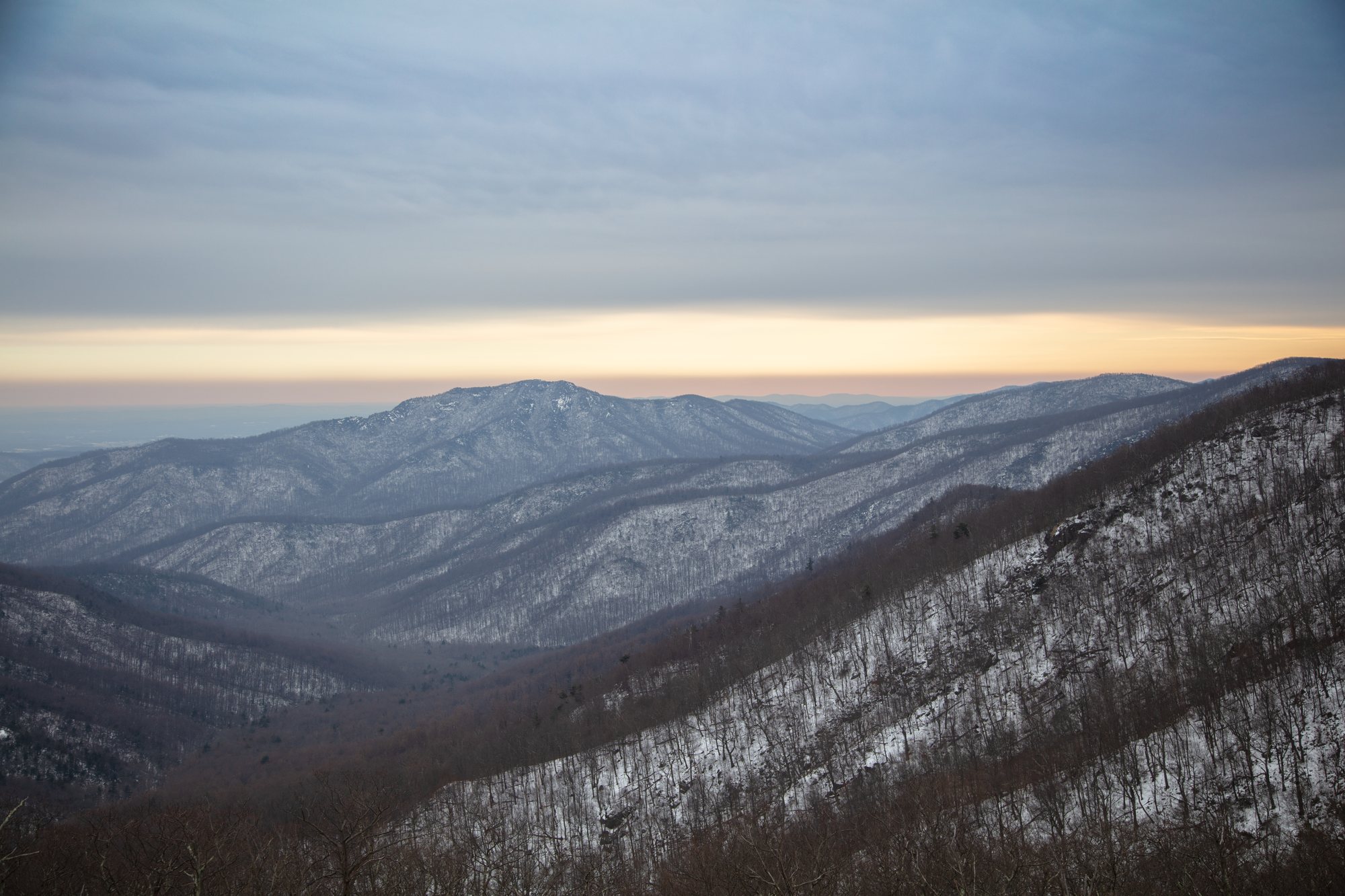
Big Meadows is the heart of it. Roughly mile 51, halfway down the drive, it’s a rare wide-open clearing on a range that’s otherwise wall-to-wall forest — and open horizon is exactly what a stargazer wants. A lodge, a campground, a visitor center and the biggest gathering spot in the park all sit here, which is why the rangers point their telescopes at this field and no other. By day you fan out to short trailheads up and down the drive; by night you come back to the meadow.
Up the drive, then out to the meadow
An easy arrival day — pay in at the gate, settle on the ridge, a short leg-stretch, then Big Meadows after dark.
Pay the entrance fee at the gate and drive up onto the crest. Check into your lodge, then shake off the road with something short and close: from Skyland or Big Meadows a piece of the Appalachian Trail runs right past the door for a gentle evening mile through the oak-and-hickory. Then get to Big Meadows before dusk so you can find a spot in the open field while there’s still light, and let the sky come to you.
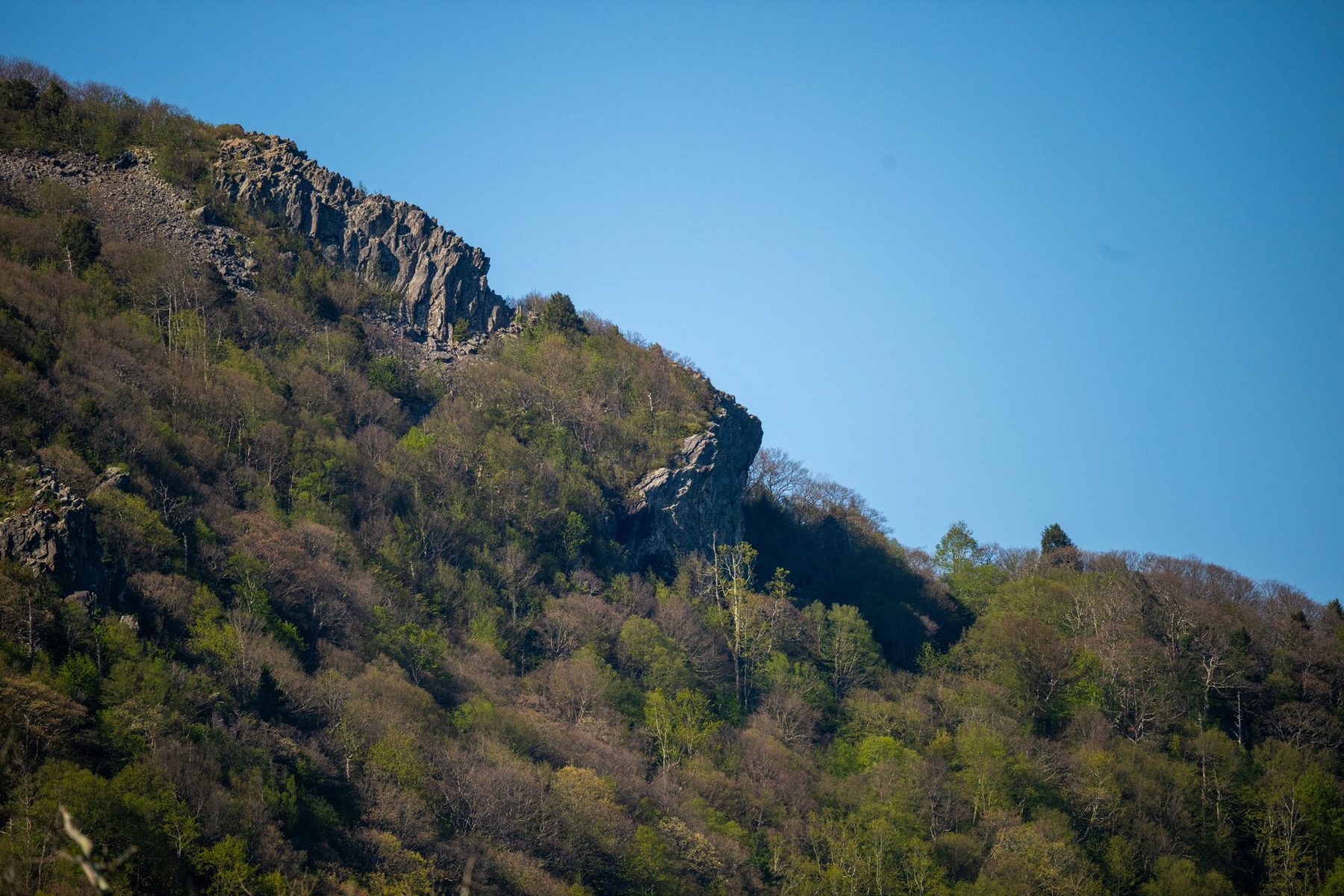
The meadow is the park’s one big clearing, and after the day crowds thin it turns into a wide, dark room. Arrive at dusk, walk out from the parking area into the grass, and give your eyes a full twenty minutes — no phone screens, no white flashlights. On a clear, moonless night the summer Milky Way rises in the south; the Washington glow sits low in the northeast, so face away from it. First night is the shakedown: you’ll learn where to stand and what to pack for tomorrow.
Honest note: this is Bortle ~4, not Cherry Springs. The core is visible but soft, and any moon or high haze washes it out fast. Time it for new moon and a crisp, dry night.The roof of the park, then the darkest field
The day the trip is built around — stand on the highest point in Shenandoah, rest up, then a second, dialed-in night under the stars.
Drive to the Hawksbill trailheads near mile 45–46 and climb to the highest point in the park, 4,050 ft, where a stone observation platform gives a full 360° over the Blue Ridge and the Shenandoah Valley. Easiest is the Upper Hawksbill Trail — ~2.1 mi round trip, ~520 ft of climb; the Lower Hawksbill Trail is shorter (~1.7 mi) but steeper, and a ~2.9 mi loop stitches the two with the AT for a fuller circuit. A very doable half-day, even for a family. Pack a lunch for the platform.
This is a fine spot to scout your night: from the summit you can read exactly where the western sky opens up and where the eastern glow sits, and time the evening accordingly.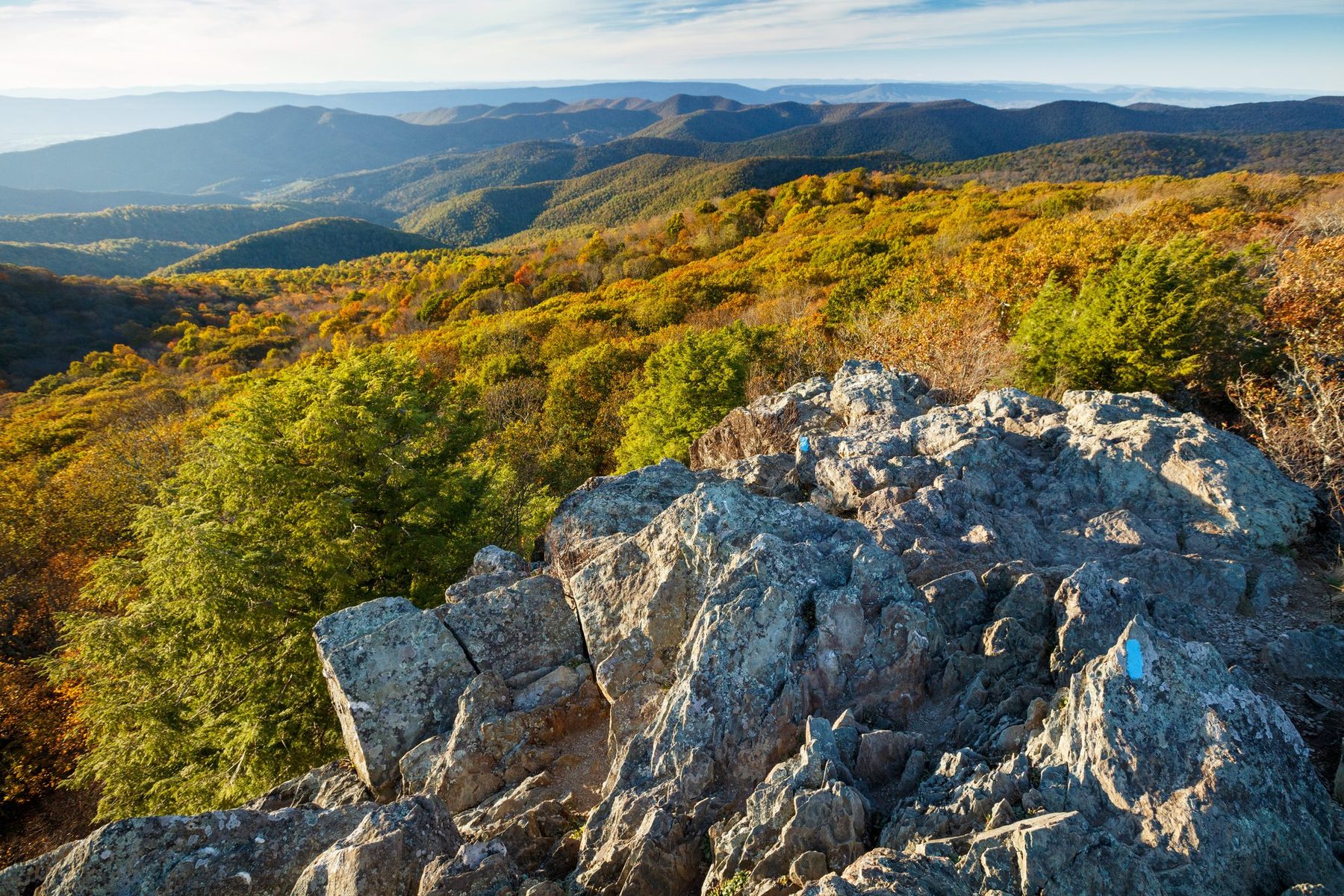
.jpg)
If Hawksbill is too much sun for the day, swap in the Bearfence rock scramble (mile 56.4, ~1.4 mi round trip, a genuine hands-and-feet scramble over greenstone boulders to a 360° view) or the easy Stony Man loop from Skyland (~1.6 mi). Back at base for a real dinner and a rest, then out again — because tonight you know the drill.
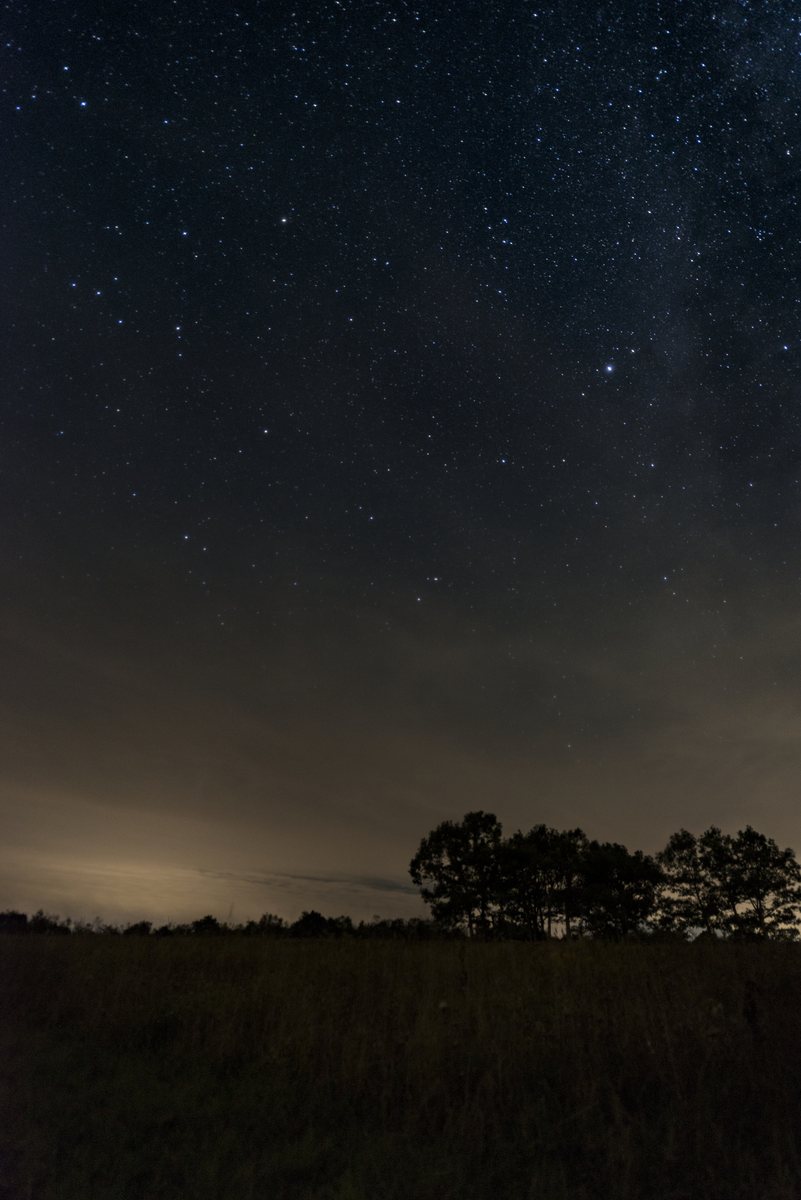
Second night is the one you came for. If it’s clear and near new moon, give it the full evening — the Milky Way naked-eye over the meadow, easy summer targets in binoculars, and a real chance at meteors. For the darkest possible horizon, trade the meadow for a west-facing Skyline Drive overlook a few miles from Big Meadows, putting the ridge itself between you and the Washington glow.
Around the August Night Sky Festival, the rangers set up telescopes on the meadow and the Skyland amphitheater runs late programs — worth timing a trip around if you want company and optics. It’s free with park entry.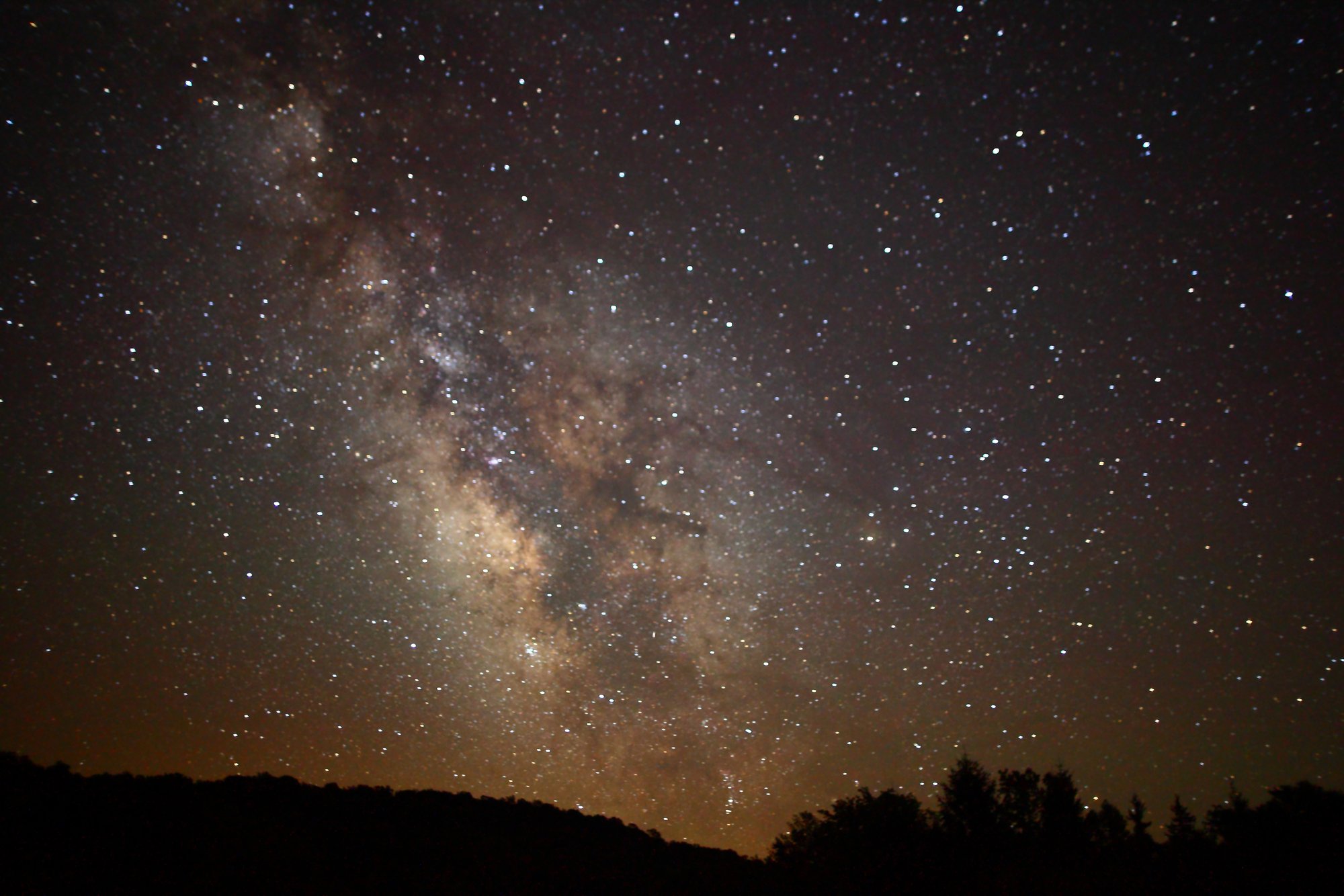

A waterfall walk, then down the drive
Two late nights earn a slow start. One gentle hike close to base, then the long, scenic roll off the ridge.
For a soft finish right by Big Meadows, walk down to Dark Hollow Falls (mile 50.7, ~1.4 mi round trip) — a tumbling 70-foot cascade, the closest waterfall to Skyline Drive. It’s all downhill to the falls, which means the last half-mile back up is the honest bit of the day; take it slow. Then point the car down the drive. The road itself is the last attraction: a long, overlook-studded descent off the crest.
Chasing bigger water? Farther south the Rose River and Whiteoak Canyon loops string several falls together for a longer morning — but they climb, so save them for a day you didn’t spend the night before under the stars.If you want more
Old Rag — the park’s famous, strenuous ~9.4-mile loop with a long, exposed rock scramble; unforgettable, but a full committing day and its own thing entirely. Note it needs a $2 day-use ticket (in addition to park entry) from March 1 to November 30, sold online in advance via recreation.gov — and check the NPS site, as its main parking lot is under construction through 2026. Time it for the Night Sky Festival — usually a weekend in August at Big Meadows and Skyland; free ranger star parties and telescopes. Go in fall — the Skyline Drive foliage is a destination in itself, and the longer autumn nights get darker earlier. Rainy morning? Luray Caverns, down in the valley, is the classic weather-out.
Not the darkest sky in the East — but the darkest one an hour from the Beltway, on a high ridge you can sleep on and hike by day.